Connected Compliance for YonSuite Operations
How YonSuite Data Reaches Advintek
- Finance Record Collection: Gather relevant finance and sales records from YonSuite before initiating structured invoice processing.
- Customer Billing Assessment: Examine customer, billing, and revenue details linked to originating business transactions before invoice preparation.
- Procurement Data Mapping: Match procurement and inventory information with related commercial records to maintain complete transaction context.
- Operational Record Association: Relate manufacturing, project, and asset references to applicable financial information before validation and processing.
- Accounting Dimension Verification: Check accounting dimensions and organizational relationships against source YonSuite records before structured data routing.
- Validated Invoice Transmission: Send approved invoice information through Advintek while retaining links to originating ERP transactions.
What Advintek Connects Across YonSuite
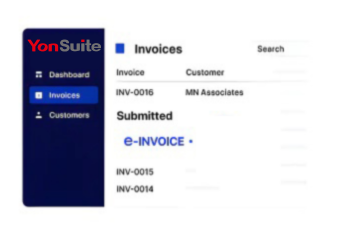
Advintek integrates YonSuite ERP data with Vietnam invoice processing through GDT, linking accounting, procurement, inventory, manufacturing, projects, assets, and customer information.
- Link revenue activity with invoice records
- Associate suppliers with procurement transactions
- Connect expenses with accounting information
- Relate projects to billing workflows
Advantages Across YonSuite Business Processes
- Accounting Workflow Alignment: Keep YonSuite accounting data connected to invoice workflows while maintaining established financial relationships across business operations.
- Revenue Record Visibility: Track customer activity, billing records, and revenue information across connected financial processes for clearer transaction visibility.
- Purchasing Data Coordination: Match purchasing activity with supplier records and accounting details to support accurate invoice processing.
- Inventory Transaction Tracking: Maintain inventory and warehouse relationships alongside commercial transactions as they move through structured invoice workflows.
- Production Billing Mapping: Link manufacturing and project activity with related billing records to improve operational and financial traceability.
- Asset Information Continuity: Carry asset and organizational details across invoice processes to support reporting, reconciliation, and financial analysis.
Your Vietnam e-Invoicing Capabilities, Connected
Invoice Record Review
Review invoice records against originating YonSuite transactions for stronger processing accuracy and reconciliation.
Dimension Context Analysis
Analyze accounting dimensions supporting customer, supplier, project, and organizational invoice context during review.
Transaction Reference Tracing
Trace procurement and inventory references across connected invoice and financial workflows during reconciliation.
Supporting YonSuite Operations Throughout Vietnam
Advintek supports YonSuite environments across Vietnam by connecting financial management, procurement, supply chain, manufacturing, projects, assets, and organizational information with structured invoice workflows while preserving source relationships across established ERP processes.
- Track revenue records across financial processes
- Match procurement activity with supplier workflows
- Associate project information with billing records
- Incorporate asset details into structured reporting data
Streamline Your Enterprise Invoice Operations
Route YonSuite records into Vietnam invoice workflows with Advintek.
Align finance processes across connected ERP operations.
Ready e-Invoice System
FAQs YonSuite ERP E-Invoicing in Vietnam
How can YonSuite accounting records support Vietnam e-invoicing?
YonSuite financial information can include accounting entries, customer balances, tax attributes, organizational dimensions, and related transaction references. Advintek can connect applicable accounting records with structured Vietnam invoice workflows while preserving source relationships. This helps finance teams coordinate invoice preparation with existing YonSuite financial processes and maintain clearer links between business transactions and accounting information.
Where does YonSuite inventory information fit within e-invoicing?
Inventory information can provide item, warehouse, movement, and transaction context surrounding sales and procurement activity. Advintek can associate applicable YonSuite inventory records with invoice workflows when relevant, preserving relationships between goods movement and commercial transactions. This helps finance teams understand the operational source of invoice information during reconciliation and downstream financial review.
Can YonSuite manufacturing records contribute to billing processes?
YonSuite manufacturing capabilities can provide production orders, material information, finished-goods activity, and related operational references. Where applicable, Advintek can associate manufacturing records with structured billing workflows, helping businesses connect production activity with commercial transactions. The ERP remains responsible for manufacturing operations while invoice processing retains relevant production and financial context.
How can YonSuite project data influence invoice processing?
YonSuite project management can provide project references, contracts, revenue information, procurement activity, and related financial context. Advintek can connect applicable project records with invoice workflows, allowing finance teams to preserve relationships between project activity and billing information. This supports clearer transaction traceability when invoices need review against underlying project operations.
Which YonSuite records can help reconcile electronic invoices?
Reconciliation can reference sales transactions, procurement documents, inventory movements, accounting records, project information, asset data, and organizational dimensions within YonSuite. Advintek can preserve applicable relationships among these records during invoice processing, giving finance teams a clearer source trail for reviewing structured invoices, investigating differences, and confirming alignment with underlying ERP transactions.